Should you write a romance bestseller?

Have you been tempted to write a romance bestseller lately? The other day, I was chatting to an author about how speculative fiction is such a hard-sell in India. (It’s the usual conversation between science fiction writers. There’s a handful of passionate us, and a handful of equally passionate readers. The others, don’t really care if it’s not mythology.) Immediately, I get a WMA (well-meaning advice):

“Write romance. It sells like hot cakes in winters.”
Umm. Frankly, all Indian writers, be it of any genre or creed, have thought about romance once in a while. After all, it’s the most selling genre in our country. I did seriously consider it for a second. I did!
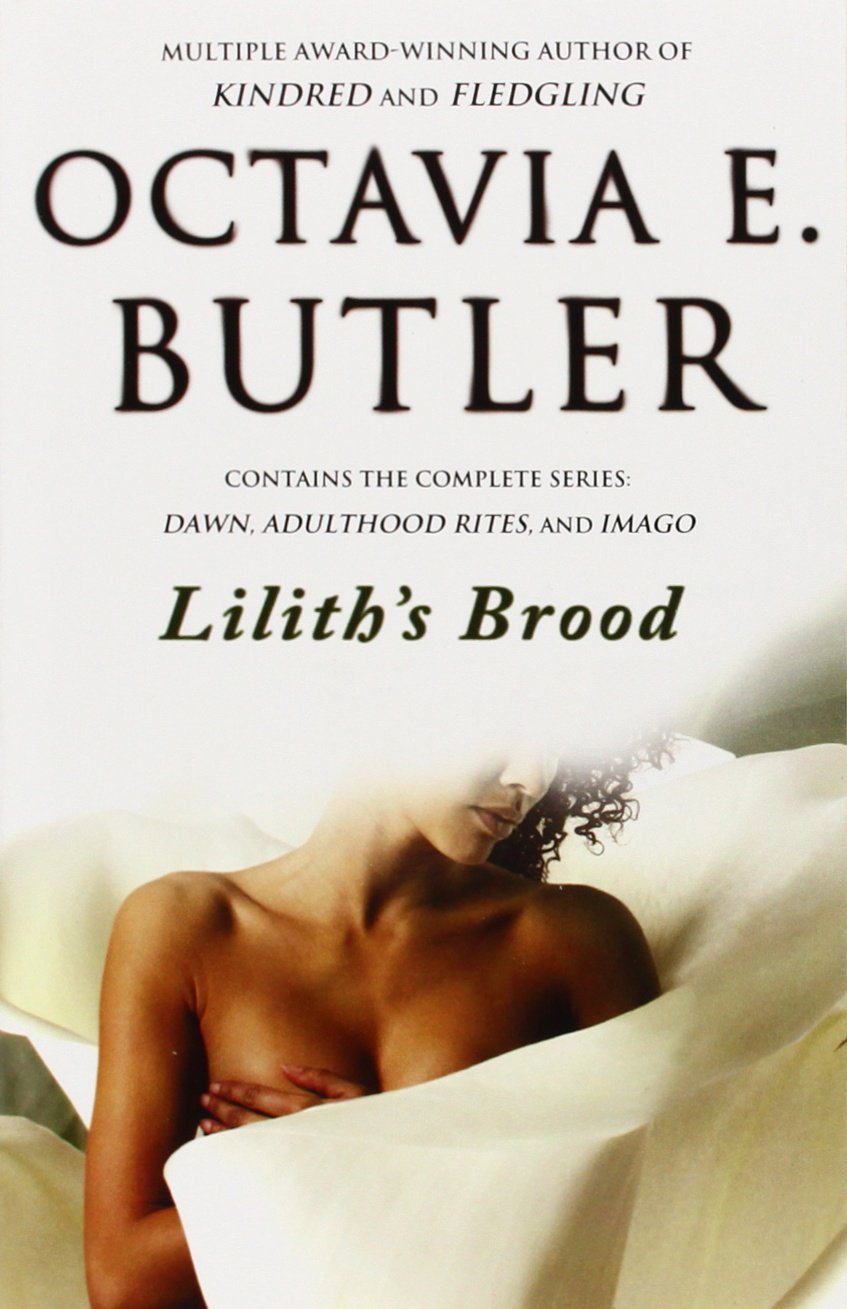
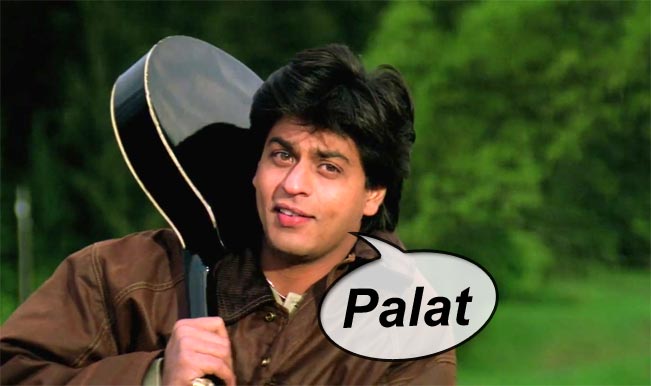
And then I remembered, that the last romance I read and appreciated was between the Oankali, alien genetic engineers who  touches DNA in humans to have sex and a woman named Lilith. Author Octavia Butler‘s Lilith Brood gave me as many goosebumps as decades ago Sharukh Khan’s ‘palat’ in the movie Dilwale Dulhania Le Jaayenge had done. And  I don’t read much romance myself, unless it has alien spit or monster claws involved. So I turned my eyes away from the temptation of writing that romance bestseller we all think we can write and decided to plod along on the current science fiction mess I’m in the middle of.

Should you write a romance bestseller?

Which is why when I came across this witty sketch by author Sarah Maclean over Twitter, I had to share it on my site. Sarah is a period romance writer based in New York. The flowchart tells you how to decide on whether you should write a romance novel or not. As I read it, I was ‘out’ in the first step itself. If you’re considering writing romance like me, due to a WMA given by another or by yourself, do read and go through this flowchart. You’ll figure out the truth, I promise!
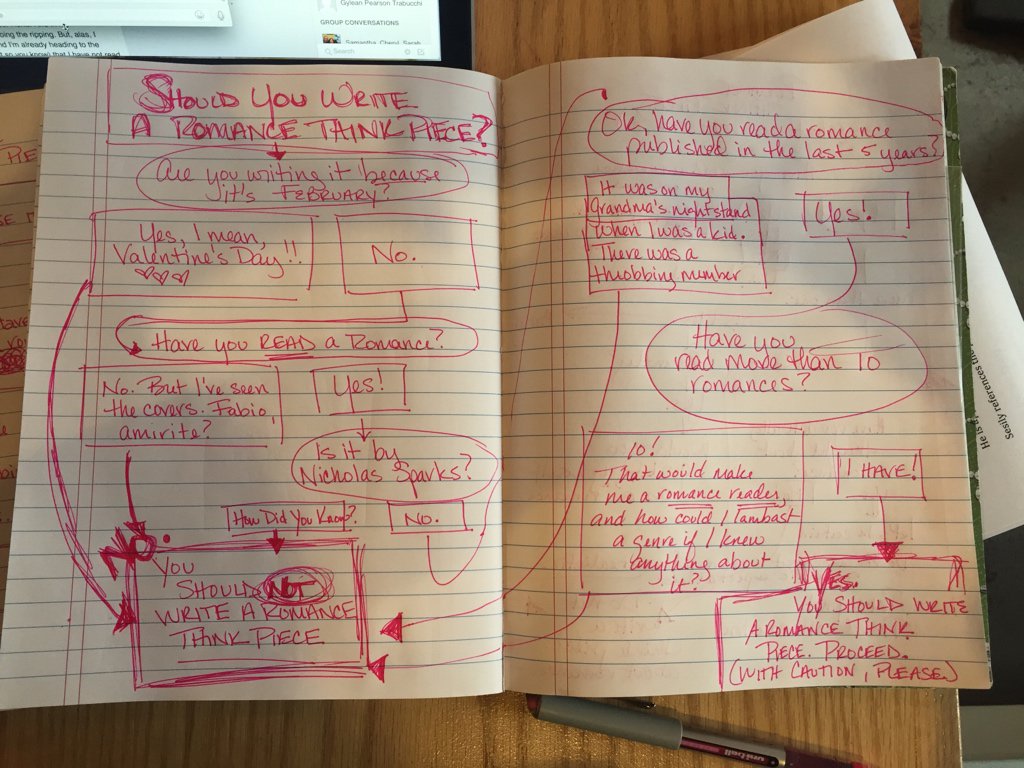

Have you ever considered changing your genre and writing something else that is selling well nowadays, like mythology or romance? Do tell me the truth!


Natural ways to get rid of springtime allergy

The flowers are blooming, the grass is lush and green. The allergy season is here and some of us will start sniffling and coughing. “Spring brings with it flowers, fragrances and allergen pollen,” says Shikha Sharma, founder and managing director of Nutri-Health, a wellness clinic in New Delhi. When you come in contact with allergens, be it dust, smoke, pollen, pets dander, insect sting or even a strong smell, your immune system responds hyperactively, making you cough, sneeze or wheeze.

It’s the allergy season

“The irritating dry cough is difficult to control as it is a result of airway hyper-reactivity to allergens,” says Zafar Ahmad Iqbal, consultant, pulmonology, sleep and critical care, at the Fortis Hospital in Mohali. Throat allergies can lead to muscular chest pain, throat pain, wheezing and, in some cases, breathlessness and difficulty in swallowing. The best-case scenario is to pinpoint and avoid the allergen that triggers your cough, but this may not always be possible. “If it becomes severe or lasts for more than two weeks, it might not be allergic in nature,” says Dr Iqbal. “It could be bronchial asthma and you might need a doctor.” If you keep getting a sore throat, however, you should start gargling in the mornings with warm salt water to protect yourself in this season, suggests Sharma. “Gargling pulls out fluids from inflamed tissues in the throat, loosens thick mucous, and removes allergens, bacteria and virus from the throat,” says Sharma. As the mucous thins and the bacteria clears up, your throat will feel better. So before you ravage your body with another anti-allergen pill, try these natural ways to get rid of those constant wheezes.


Shy away from all things floral

Continue reading “Natural ways to get rid of springtime allergy”

How a hair oil brand inspired an Indian science fiction tale in 1896

While reading about early examples of Indian science fiction, I came across a wonderful scholarly tale of how Jagadish Chandra Bose, a physicist and science fiction writer in India in late 19th century, wrote a bilingual science-fiction inspired by a hair oil brand. The article, written by scholars Anil Menon and Vandana Singh, who also write speculative fiction (here and here), has names of  various other writers who wrote science fiction in late 19th and early 20th centuries. Using it on my website with due permission from Anil and with a lot of glee.


We have chosen two stories—one by Jagadish Chandra Bose (1858-1937), the other by Naiyer Masud (1936—)—not as representatives of Indian speculative fiction but as interesting instances of the genre. Bose’s story is indicative of a special period in the subcontinent’s history and we finally had an excellent translation to work with. We chose Masud’s story because it is a wonderful story.

Of course when the range includes seventeen-odd languages over some hundred and fifty years of scribbling (two thousand plus, if mythic fiction is included), these two choices are more or less equivalent to two hands raised in surrender. We were tempted by the first south-Asian short story in English, Kylas Chunder Dutt’s “A Journal of 48 Hours In The Year 1945” (1835), Shoshee Chunder Dutt’s “Republic of Orissa: Annals From The Pages Of The Twentieth Century” (1845), V. K. Nayanar’s “Dwaraka” (1892), Sarath Kumar Ghosh’s Prince of Destiny (1909), Rokeya Sakhawat Hossain’s much-reprinted “Sultana’s Dream” (1905), Rajshekar Bose’s Ulat Puran (1925), the satirical Hindi SF of Harishankar Parsai, the Tamil pulp SF of ‘Sujatha’ Rangarajan, Premendra Mitra’s whimsical Bangla tales, and the eerily postmodern folktales recorded in A. K. Ramanujan’s anthologies. We could just as easily have picked Manoj Das’s “Sharma and the Wonderful Lump” (1973), Bibas Sen’s “Zero-Sum Game” (1994), Manek Mistry’s “Stories of the Alien Invasion” (2007), or one of Kuzhali Manickavel’s short stories. We had to sidestep one of the most talked-about works this year, Shovon Chowdhury’s alternate history The Competent Authority (2013). Ultimately, we chose Bose and Masud.

Acharya Jagdish Chandra Bose—the “Acharya” means teacher—pioneered research in electromagnetic waves and biophysics, and invented and built instruments of astonishing precision and delicacy to measure plant development. He probably would have been a brilliant polymath in any age, but the colonial time in which he lived and his courageous response to its constraints made him once-in-a-generation scientist. In 1896, Bose wrote a bilingual science-fiction story, “Nirrudeshar Kahini” (The Story of the Missing). The main narrative is in Bangla, but the embedded scientific material is in English. The story is about a man who calms a storm at sea by pouring a bottle of hair oil on the troubled waters.

Hair oil? Continue reading “How a hair oil brand inspired an Indian science fiction tale in 1896”

Report a bribe or file an RTI – All through your phone

If you wish to be involved with the process of your government, as any citizen should, you do not necessarily need to wait for the UMANG app. There are already many apps that allow you to ask questions, offer suggestions and get involved in government initiatives. Till the government comes out with UMANG, we suggest a few other apps you can try.

Participate in policymaking

Are you very vocal about government policies? If yes, head to MyGov (free on Google Play, Mygov.in), an online portal of the Union government where different departments seek suggestions and advice. Over the last year, the site saw discussion on ideas such as simultaneous elections and open data use licence and invited suggestions on a draft policy note on value capture finance. It also allows you to take part in logo-making and design competitions. If you want the Prime Minister to talk about an issue on his ‘Mann Ki Baat’ show, you can give your ideas on this site. So just log in and air your ideas.

Since its launch, the app has seen more than 500,000 downloads, though it is a bit slow to load and hasn’t been updated since 2015. The website offers the best experience.

File an RTI

Continue reading “Report a bribe or file an RTI – All through your phone”

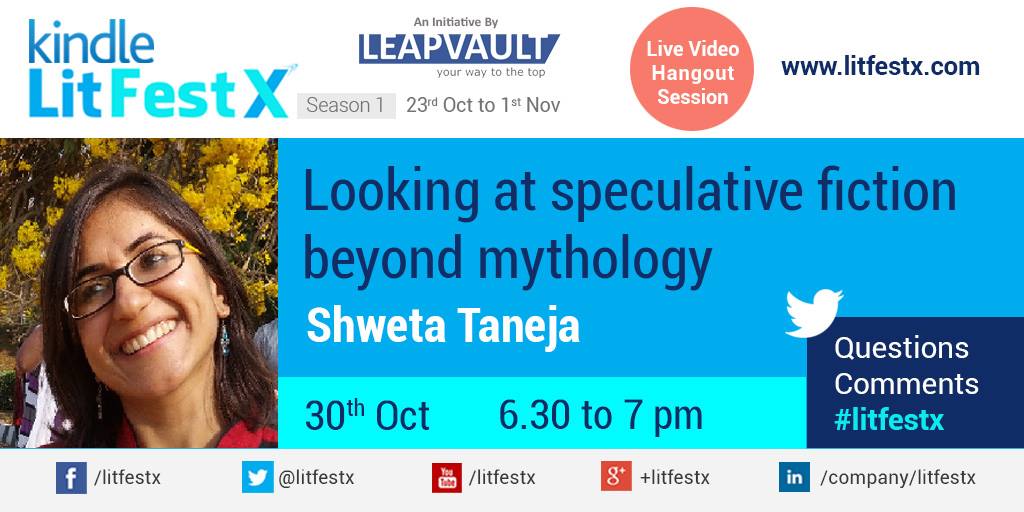
Looking at speculative fiction beyond mythology

Is speculative fiction beyond mythology possible in the literature coming out from our country? Till now, most of the speculative fiction that has come out of the country (even mine) has been heavily inspired or uses characters from our rich Hindu mythology. I take the topic head on in this talk at the LitFestX. This video is from 2015, so a little dated and since I’ve spoken there, there has been a lot of amazing books that have come out in the genre, but I’m adding it now because frankly, at that time, I lost track of things and never added this in my blog. See if you’re interested in hearing my thoughts on the topic. Have thoughts, disagree? Add to the comments below.

Must-have sports apps for sports lovers

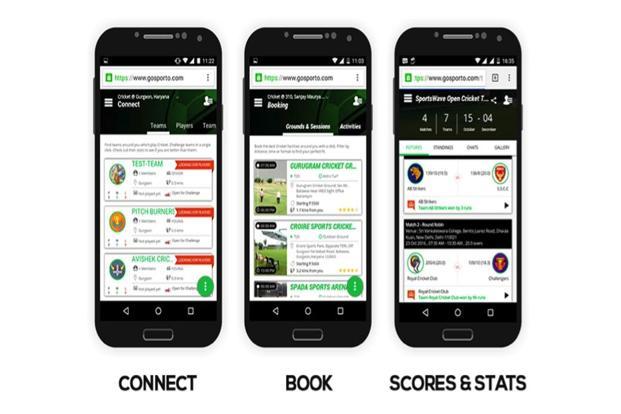
Whether it’s finding a sports partner or places to play, your phone has it covered with smart sports apps. During college, Gururaj Upadhya was a badminton champion. But once he started working, he left sports behind. “After 10 years of work, I wanted to pursue badminton again,” says the 37-year-old chartered accountant from Bengaluru. Expensive club memberships would have been a waste, given that he was travelling a lot. This is when he came across Playo, an app that connects people who play sports. He not only found sports mates but also badminton courts he could book at an hourly rate. Upadhya now plays four times a week, hosts badminton matches and runs a 70-people badminton group within the app.

If, like Upadhya, you want to follow your passion for sports, here are some apps that can help you find a place and/or a partner.

Spyn

Continue reading “Must-have sports apps for sports lovers”

Slavery in India and how it compares to the world

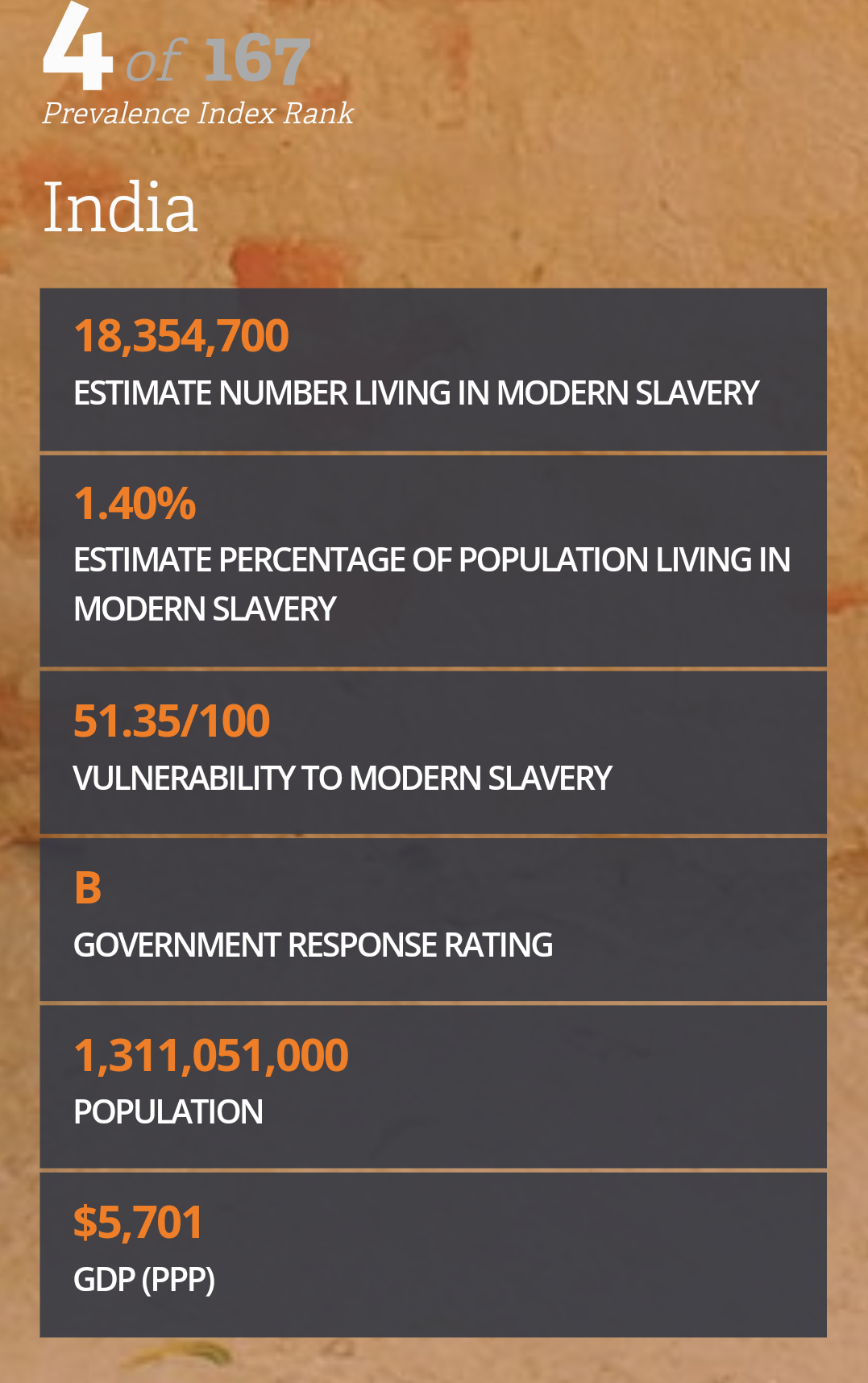
While browsing the layers that is the internet, I came across Global Slavery Index and found the facts that they’d written about India after research quite intriguing. There are lots of little nuggets there to mull over and think about various ways we ignore, encourage and are okay with slavery in our country. I had hoped this is not true, that it’s fiction, or something that can come under my Tall Tales section, but unfortunately, that is not to be. An excerpt from the report.


How many people are in modern slavery in India?

India is undergoing a remarkable ‘triple transition’, in which economic growth is both driving and is being affected by rapid social and political change. Economic growth has rapidly transformed the country over the past 20 years, including the creation of a burgeoning middle-class. In 1993, some 45 percent of the population were living in poverty; by 2011 that had been reduced to 21 percent.In addition to economic growth, ambitious programmes of legal and social reform are being undertaken right across the board, from regulation of labour relations to systems of social insurance for the most vulnerable.

Continue reading “Slavery in India and how it compares to the world”

Interview: Literary agent Kanishka Gupta on publishing

I’ve always found the job of a literary agent very curious. Since as an author I know that most Indian authors don’t make much money, I do not understand how a literary agent, who charges the author 10-20 percent commission on royalty, makes any money in Indian publishing. This curiousity led me to ask these questions to Kanishka Gupta, a friend and my agent in India for YA/A novels.

Kanishka runs the literary agency Writer’s Side and has represented more than 400 authors in his short six years as an agent. I find him superquick in his responses, honest about his feedback and open to debut authors. In this excerpt he answers all those questions about agenting that had got me curious. I haven’t edited the blog, so it’s rather long. Take your time.


Q) A literary agent is rather an unusual profession. People who come into it, either wanted to be writers or publishers. How did you start as a literary agent?


As an out-of-job, out-of-sorts struggling writer in my early twenties, I was deeply perturbed by the lack of a support mechanism for writers in the country. At that time there was just one literary agency ( yes one!) and publishing editors were like inaccessible government bureaucrats. After freelancing briefly for a literary agency and a well-known novelist, I took the entrepreneurial plunge and founded Writer’s Side. In the beginning WS was more of an editorial consultancy but over time we have shifted our primary focus to author representation.

Continue reading “Interview: Literary agent Kanishka Gupta on publishing”

True love stories from Tinder. Internet style.

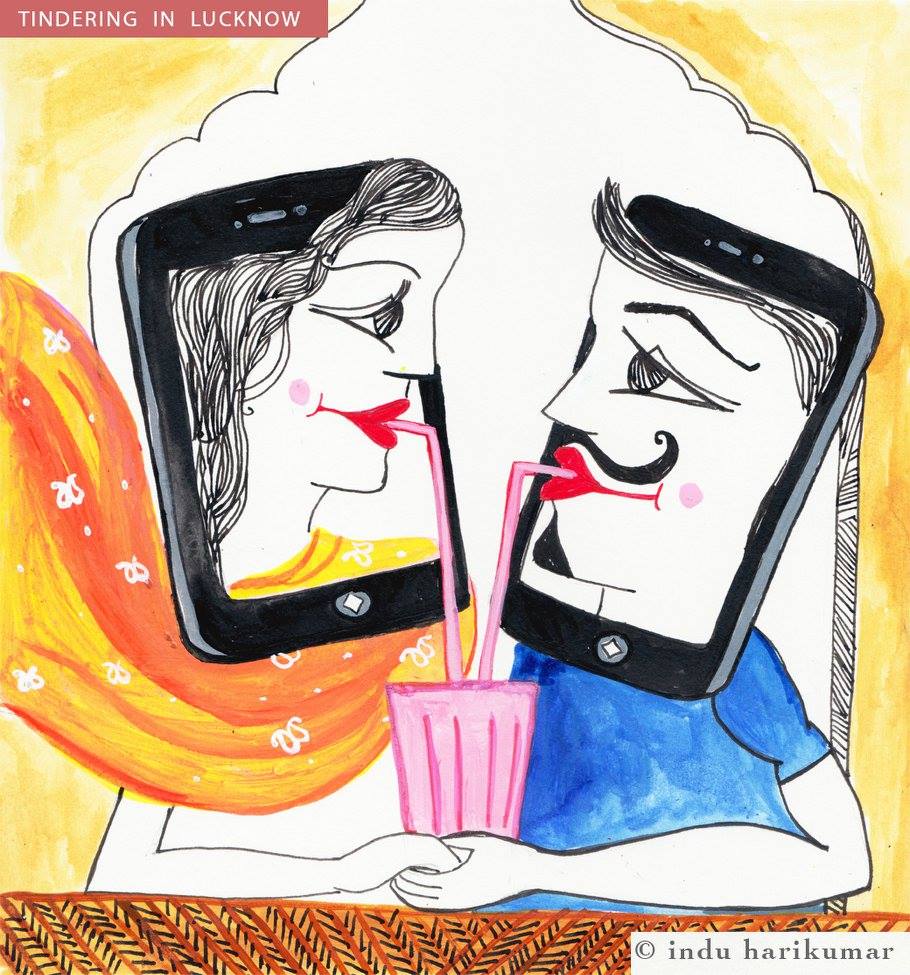
How does love blossom in the world that is the internet? What do you feel as you swipe left or right, deciding instantly on a pose, or a hashtag or just the numbness in your thumb? I’m always fascinated by how love shapes itself online. Which is why when I came across #100IndianTinderTales, an art project by the fantastic Indian artist, Indu Harikumar or Induviduality, whose work I’ve been following for years, I just had to share some of it on my site. The project has “true stories and experiences of people using Tinder in India and Indians using Tinder abroad” with images by the artist. They’re full of glee, sex, intrigue, crushes, obsessions and in some cases true love. Curl up this Valentine’s with a few of my favourite ones. For more, head to the artist’s Facebook or Instagram page.


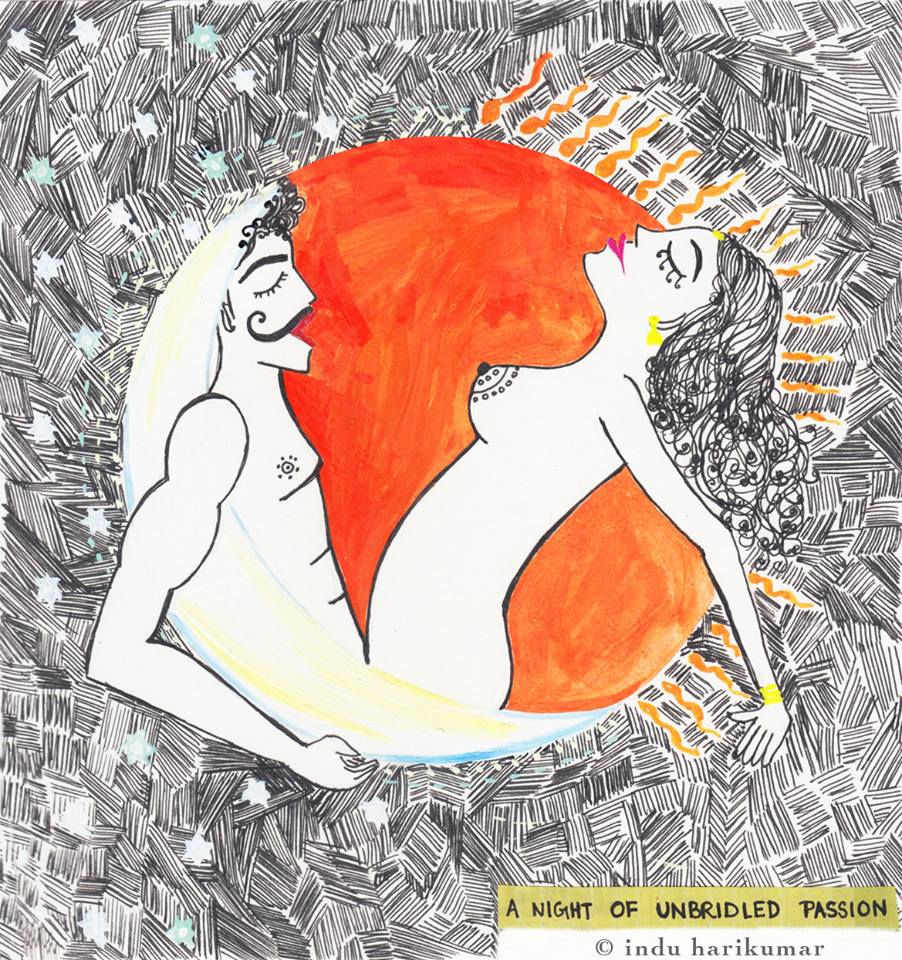
 Day 22: P from #Delhi writes about a night of unbridled passion

“By age 37, I have experienced the truest of loves and its devastating loss. A heart that has loved so singularly & lost so purely becomes either fearless or reckless. So when a chance Tinder encounter (truly chance because he is only in the same location for a couple of hours when we ‘match’) reveals himself to be perfect in all ways except that he’s married, I don’t disqualify him. It is the coldest thing I’ve ever done – to pursue an intensely sexual encounter with an absolute stranger from whom my heart wants nothing. It also makes me feel alive. We meet and have a spectacular night without an ounce of sleep. I get a cab in the early hours of the morning and as I ride back, there’s a smile on my face, a glow in my body and an absolute absence of guilt.”


Continue reading “True love stories from Tinder. Internet style.”

Where to go to rent a designer outfit

Renting a designer outfit is not only possible but easy in India.

When Andria D’Souza urgently needed a designer outfit for a party, she didn’t know who to turn to. “I had nothing to wear, it was a day before the party and I was desperate,” says the 30-year-old Mumbai-based actor. Then someone suggested Delhi-based Swishlist, a designer-wear rental website. D’Souza browsed it and within an hour had selected the perfect outfit, a half-stitched sari by designer Bhaavya Bhatnagar. “I ordered at 10pm and they FedExed me the dress, dry-cleaned and ironed, the very next evening,” she says. D’Souza, who owns a designer gown bought for Rs80,000, which she has worn only once, says this kind of rental service is a boon.

“Spending Rs80,000 on a dress which you wear once kind of pinches,” she says. “On the other hand, renting a designer outfit for as little as Rs2,000-4,000 is a boon.” Here are a few sites that you can look through to have a sparkling wardrobe this party season at a fraction of the cost. All websites and services may charge extra for shipping and may also have a refundable security deposit, depending on what you order.

The clothing rental

Looking for a tuxedo or a sequined dress? The Clothing Rental is a Mumbai-based rental site that offers more than 5,000 clothing options, for both men and women, from designers like Ermenegildo Zegna, Hugo Boss, Marchesa, Calvin Klein, Alexander Wang and Armani. They are open to taking orders from any city in India. “For customers who like to visit, touch and feel the product, try it on , we have two stores in Mumbai,” says Shilpa Bhatia, founder and director, marketing and business development, The Clothing Rental.

When you order, you have to give a security deposit twice the rental cost of the garment and this is refunded when the outfit is returned. “If the person damages the product beyond repair, we decide costs on a case-to-case basis,” says Bhatia. This season, they have a wide range of dresses, including sequined gowns and clutch bags for women, and coloured suits, tuxedos, bow ties, lapel pins and pocket squares for men.

Rental charges: Rs500 onwards. Order on Theclothingrental.com.

Swishlist

Continue reading “Where to go to rent a designer outfit”