Low-cost superfoods

Get healthy on less than Rs10 a day with these nutrient-packed foods.

Superfoods don’t necessarily have to be expensive or exotic. Many of these healthy foods are readily available at affordable prices. Here’s a list of foods that are loaded with nutrients and don’t cost much.
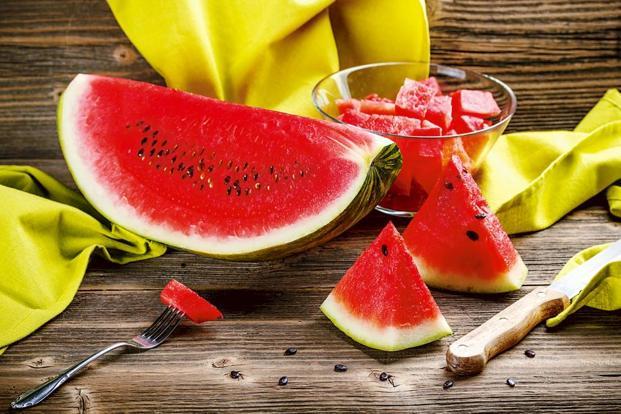
Watermelon: Rs.3* for 100g
This fruit, which is about 92% water, has significant levels of vitamins A, B6 and C, as well as citrulline and lycopene. Citrulline, an amino acid, helps in reducing hypertension and blood pressure in obese adults, according to a study published in the ‘American Journal Of Hypertension’ in 2012. Both vitamins A and C in the fruit moisturize skin and hair, prevent wrinkles and keep you hydrated. Lycopene, which gives the fruit its bright red colour, can help prevent prostate cancer, according to a study published in 2013 in the ‘International Journal Of Molecular Sciences’. “The pigment lycopene’s antioxidant properties provide protection against cancer,” says Shikha Sharma, founder of health management centre Nutri-Health Systems Pvt. Ltd, New Delhi. It has also been linked to heart and bone health and has anti-inflammatory properties. Fibre in the fruit keeps the digestive tract healthy. The potassium content helps control heart rate and blood pressure, adds Sharma.
Turmeric: 25 paise/1gphoto
This spice is one of the most effective ways to fight infections. Curcumin, the compound that gives turmeric its canary- yellow colour, is known for its antioxidant and anti-inflammatory properties. According to a study published in ‘The American Journal Of Cardiology’ in 2012, curcumin can help prevent heart attack among bypass patients. “Curcumin leads to several changes at the molecular level that may help prevent cancer and fight age-related chronic diseases,” says Shubi Husain, nutritionist and founder of healthcare clinic Health Sanctuary in Gurgaon, Haryana. The study added that turmeric keeps the heart healthy when taken in moderation. A gram of turmeric a day is an ideal, says Husain.
Red chillies: 20 paise / 1g

photo

Looking for an effective way to lose weight? Spice up your food with dried red chillies. Researchers at Purdue University, US, found that consuming red pepper not only helps in managing ones appetite but also burns more calories after a meal. The study was published in the ‘Physiology & Behavior’ journal in 2011. It observed 25 non-overweight people for six weeks and found that capsaicin, the component that gives the chilli its bite, can reduce hunger and increase the core body temperature and burn more calories through natural energy expenditure. The chilli should be consumed whole, because the taste maximizes the digestive process, according to Richard Mattes, professor of foods and nutrition, Purdue University, who collaborated with doctoral student Mary-Jon Ludy for the study. “That burn in your mouth contributes to a rise in body temperature, energy expenditure and appetite control,” said Mattes in a university press release.
Mustard oil: Rs.2.5 / 20ml

photo

This vegetable oil is not only good for your hair, but also aids digestion. According to a study published in the ‘Journal Of Preventive Cardiology’ in 2012, which compared all cooking oils in India, including canola, ‘ghee’, olive oil, groundnut, sunflower and palm oil, and their effects on the heart, mustard oil was found to be the best. Conducted by researchers from the All India Institute of Medical Sciences and Sir Ganga Ram Hospital in New Delhi, the study stated that mustard oil is rich in monounsaturated and polyunsaturated fats as well as omega-3 and omega-6 fatty acids. “Mustard oil has a good ratio of omega-6 to omega-3 fats,” says Ruia. “It is also packed with antioxidants and vitamin E,” she adds.
Read the complete article on the livemint website.
Dona Paula and her lovers

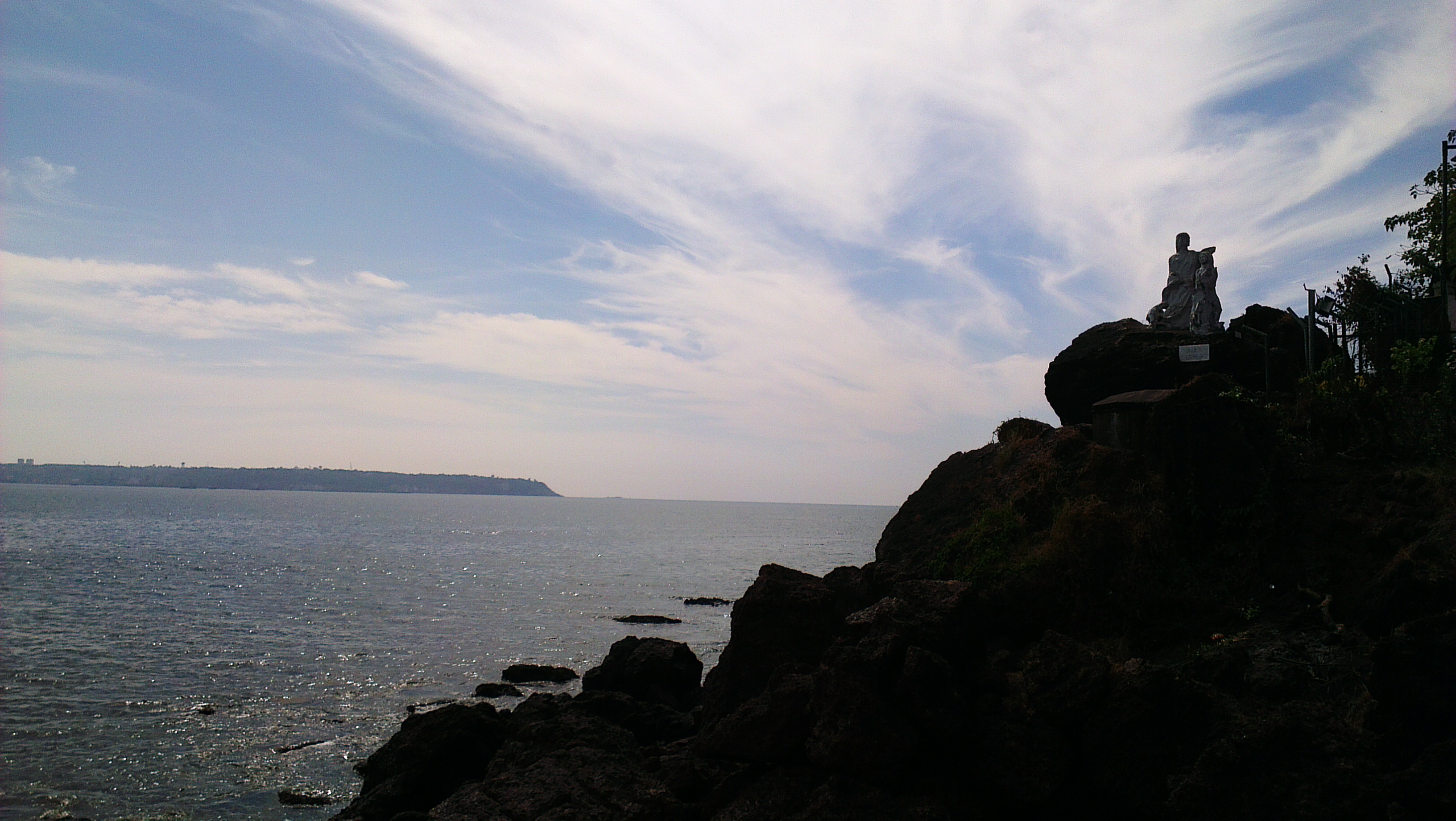
Seven kilometers from Panaji, Goa’s capital city, as the moonlight hits the crashing waves at the rocky Dona Paula beach, an apparition rises, floating to the shores, crying in its anguish. She’s a lady, stately and elegant, wandering and lost, gliding on the rocky shores of the hammer-shaped headland that divides the Zuari and Mandovi estuaries, the two major rivers of Goa. She’s naked and wears nothing but a shiny pearl necklace that glitters around her neck. Her long hair whip and gasp, constantly in motion, like the waves she glides on. She walks up the steps, reaching the viewpoint so popular with tourists during the day, and cries out in pain, a silent scream that dissolves in the crashing of the sea.

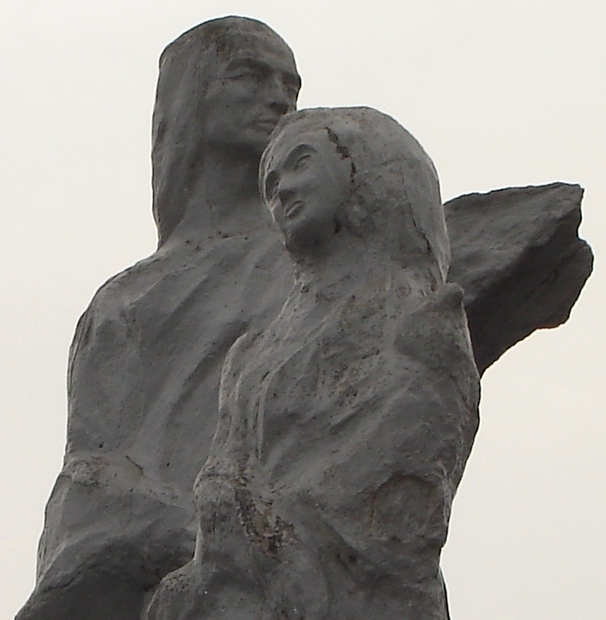
Two whitewashed statues, ravaged by the salty air, stand by the bay. Even through the corroded marble, the two lovers look away, one to the east, one to the west. I imagine Paula to be a soft spoken, polite and cultured Portuguese. The official story says she was part of an extremely affluent family, the daughter of the Portuguese Viceroy of Jaffnapatnam, in Sri Lanka. Her family arrived in Goa in 1644 which is when she married Dom Antonio Souto Maior and became Paula Amaral Antonio de Souto Maior. She was a kind woman, who helped the villagers and worked for the betterment of the local peole. So much so that when she died, the fishermen renamed their village after her. Her tombstone, says the same version, lies in what is now the official residence of the Governor of Goa, at the westernmost tip of Dona Paula. In the Chapel at the Governor’s Palace at Raj Bhawan, she lies. There on her tombstone, is an inscription in Portuguese by her inconsolable husband, who begs those who might read it to pray for the salvation of her soul. Which makes me question. What would such a kind hearted, generous lady would’ve done to need the blessing of salvation from strangers till eternity? What crime has she committed that she hasn’t been able to find peace in more than three hundred years? dp

(image source)

Continue reading “Dona Paula and her lovers”

How creating Anantya helped me find my freedom

The plotlines of most action flicks, are all about the hero. The hero rocks the roads, chases goons, tots guns, fights for justice, sows wild oats with white girls, and then heads back to home, to his heroine. All this while, this heroine, the girl, pines away back at home or sits pretty in a café (usually alongside a swimming pool for some reason), waiting for her hero. The only time she’s outdoors, she’s either surrounded by other girls, or is with the hero, or is getting raped or attacked by the goons. The message is loud and clear: The streets are unsafe for an Indian woman: If you’re out there alone, you will be slaughtered, you little lamb.

As a girl who grew up in Delhi, I was fed this message by family, society, school, college and onwards. Every time I walked on the streets of the capital city, as a teenager, as a working woman in her 20s, I had to constantly fight butt slaps, boob pinches, stares and hoots and whistles from strangers. Every time a violent act happened, I was told to not walk alone on streets, to wear looser clothes, not stare back and scream, not confront, not act, but be passive. For that’s how a woman should behave. Wait for someone else, a hero, a guy, the government or the police to react to the aggression that happens to her, to save her. An Indian woman is supposed to be passive, silently take on violence if given by her husband or in-laws, or ask for help from the boyfriend or police or government when faced from an aggressive stranger. Most of all, a woman is supposed to protect herself from all of it, to keep indoors, to make friends carefully in case they turn out to be rapists.

With Anantya Tantrist, the tantrik detective of my latest novel, Cult of Chaos, I decided to take all of these years of imbibed and heard and oft-repeated Indian values of passivity, decorum, rules and ethics meant for women and flip them, turn them on their head. Just to see what happens to the society in the world if I do. For speculative fiction gives you that freedom, to extrapolate, to try and do things differently, make new rules and new societies, explore gender roles and beliefs about gender. And I took it.

Anantya as a result, became a complete opposite to the restrictive idea of an ideal Indian woman.

First of all, she is always in the middle of action, she speaks her mind, there’s no passivity when it comes to her, in fact passivity bores her. She is boisterous, angry, spews gaali, smokes beedi, drinks hard stuff like a fish, hangs out on the streets with all kinds of things and species, doesn’t come home till wee hours, has crud in her kitchen, can’t cook to save her life, but can wield a boneblade to save another’s. She has unapologetic one night stands with all kinds of supernatural species, wears chappals and goes to parties and doesn’t know what a ‘date’ is. Continue reading “How creating Anantya helped me find my freedom”

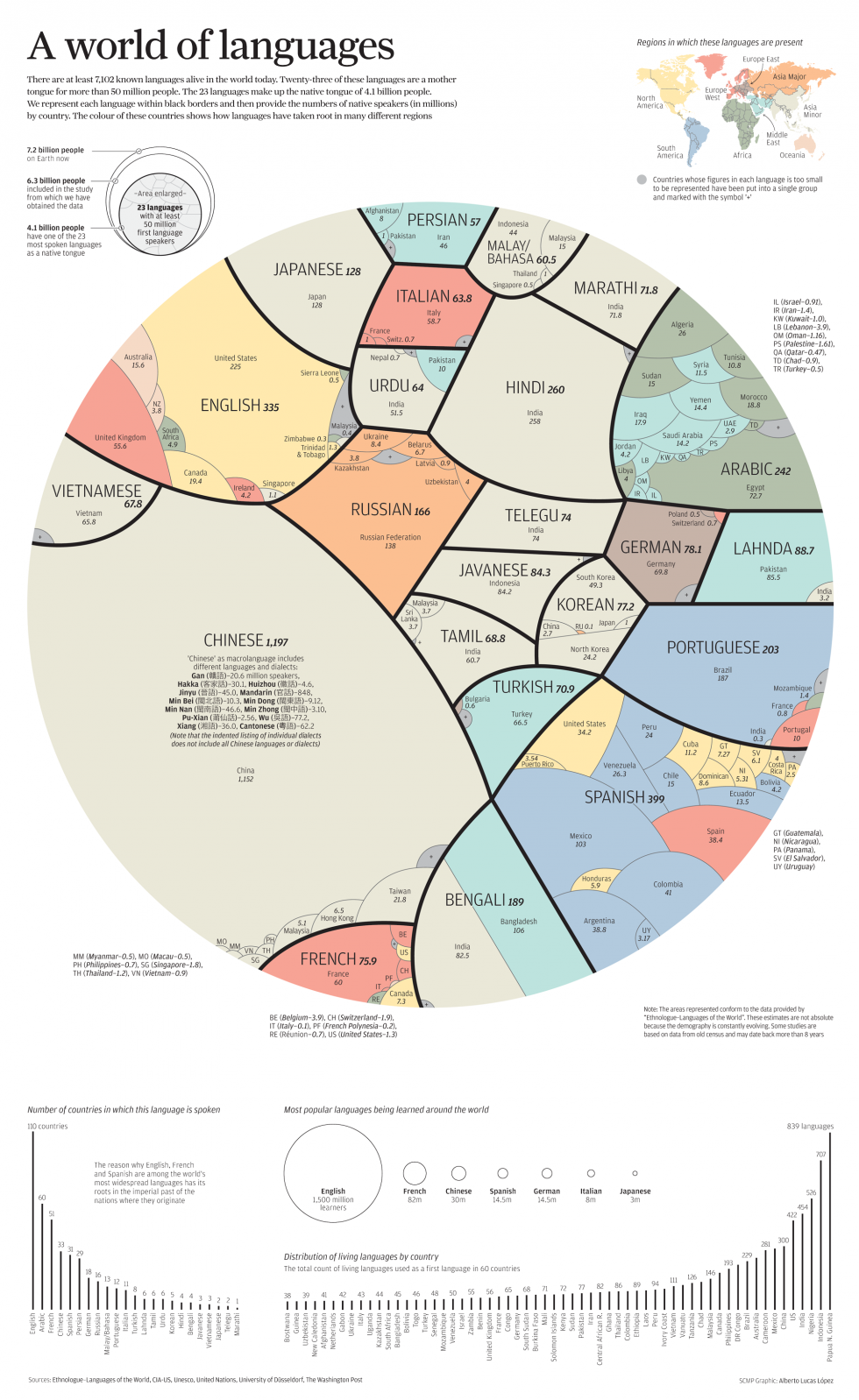
Infographics of world’s spoken languages

I’ve been researching on infographics and though I’m not usually a let’s simplify the-message-kinds, that is how it seems the world is going.

So it was a pleasure when I found this beautiful infographic created for South China Morning Post, on my timeline the other day. I shared it immediately, but wanted to keep it here, on my blog, to see, ponder on and know how languages travel through the world and through our heads and kind of change us in little ways. And how powerful that is. languages

“There are at least 7,102 known languages alive in the world today. Twenty-three of these languages are a mother  tongue for more than 50 million people. The 23 languages make up the native tongue of 4.1 billion people. We represent each language within black borders and then provide the numbers of native speakers (in millions)  by country. The colour of these countries shows how languages have taken root in many different regions”

See in detail, on the SCMP website


Donate a book to kids. Here’s how

For those who might know me, know that I love gifting books as well as getting books as gifts. I also carry a dream within me, to create libraries for kids, places they can just come and sit and browse and wonder in the world. In schools, orphanages, communities, apartment complexes, everywhere, free libraries. So with all my heart, I would like to tell you about Pratham Book‘s lovely new initiative Donate-a-Book.  (As they so well put it, drum roll please). In a blog on Pratham Books, the lovely team writes:

—————
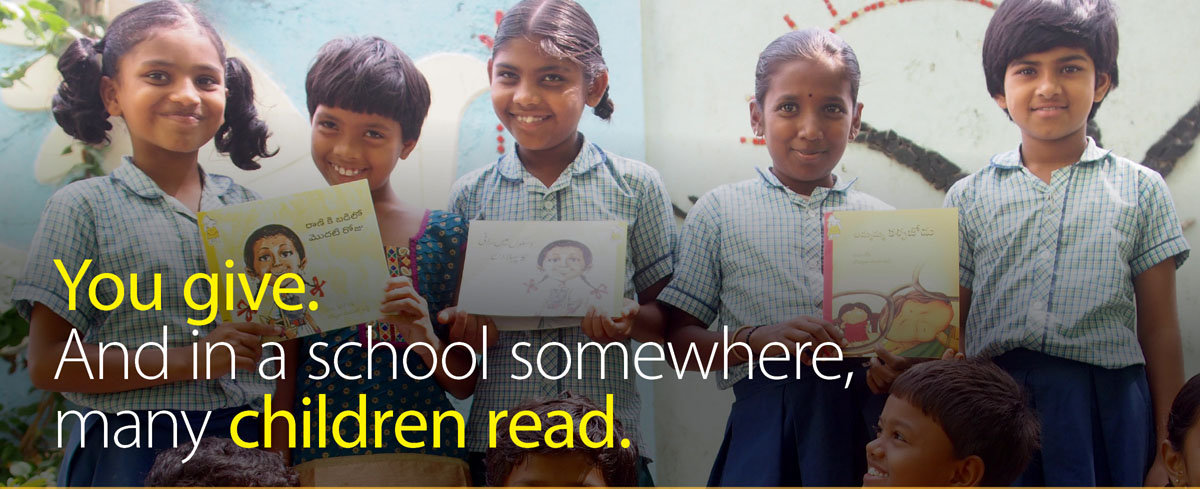
Donate-a-Book‘ is a unique crowdfunding platform that enables non profits, schools and storytellers to raise funds for books to help India’s children read. 
The platform connects those who need books and those who want to help bridge the gap. From a school for children with special needs to a Reading Champion who wants to start a library in her hometown, Donate-a-Book will create awareness about these campaigns and help raise funds to supply books from Pratham Books in multiple Indian languages.
If you are an organization/individual who wants to get books to the children you work with, get started on the Donate-a-Book platform.
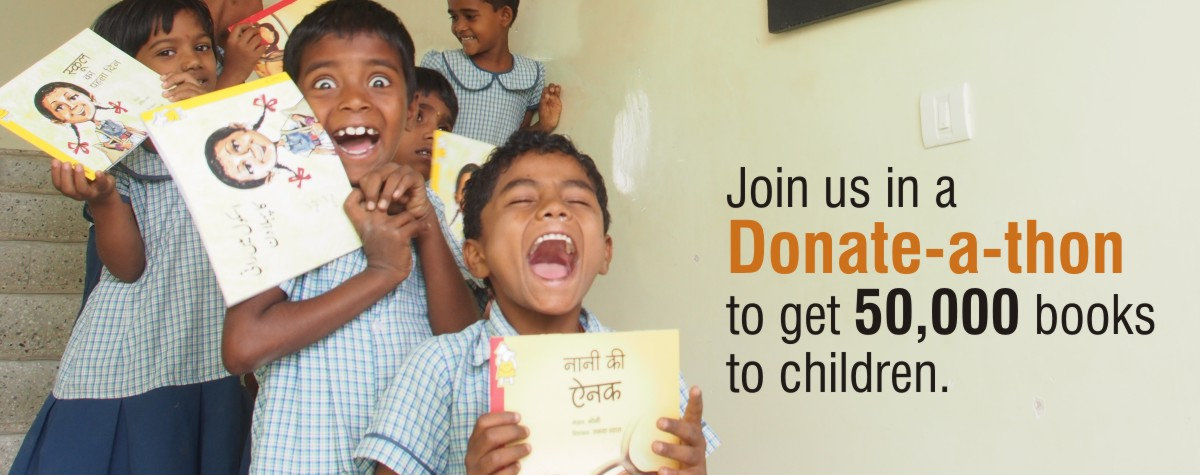
Join us, as we start a Donate-a-thon to get 50,000 books in the hands of thousands of children by 14th November 2015, Children’s Day. Currently, there are 30 campaigns that you can donate* to – from schools, non-profits, learning centres and champions. Find a campaign that resonates with you and help them build a book bank!

DoB_Banner_platform3


Hear their appeal, help them in the initiative! Donate to get a book in the hands of a child. Donate to make sure kids and adults continue to read books. Donate, now.

Joined a NGO for a bit

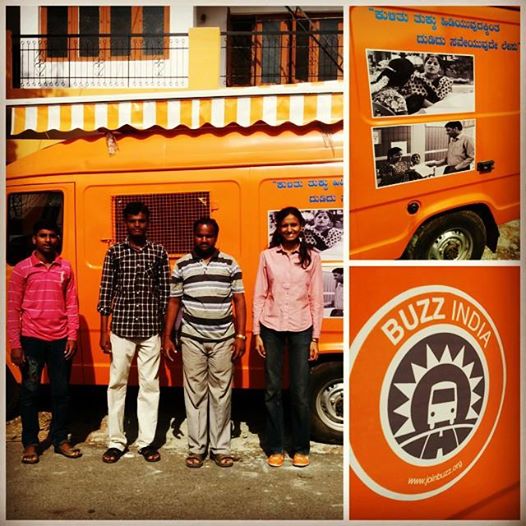
This was in the making for a while. I started off as a communication professional and I love devising angles and language for a brand. So when I came across an opportunity to work with a social organisation, how could I refuse? So I am so glad to tell you all that I’ll be working on a communication project with Buzz India, an NGO based in Bangalore, who go to villages and train rural women in managing their money and leading a more confident life. And they come with a beautiful team! Here’s them:


I’m setting up their social media, website and a future communication plan. Have ideas? Think you can help? We’re looking for volunteers to come with us to villages and record, take photos of the rural women. Contact me. Now!

Get termed geek and non-intellect in same blog. Check.

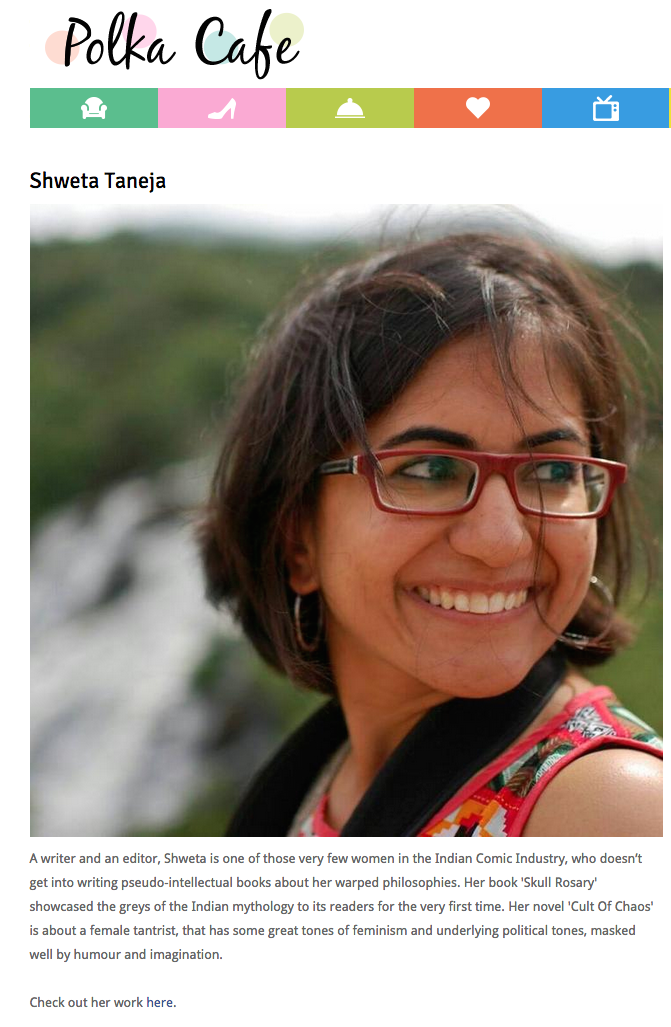
Aaand it’s done. Polka Cafe, who’ve made a mark with listicles around books (read here, here and here), have included this one in a listicle of interesting comic geeks that live in Bangalore. Not only that. This is what they say about Cult of Chaos: Her novel ‘Cult Of Chaos’ is about a female tantrist, that has some great tones of feminism and underlying political tones, masked well by humour and imagination.

(Hops up and down with sheer glee).

Shweta Taneja - Polka Cafe


And they call me non-pseudo intellectual. Oh man! This also reminds me how I fought Thejesh, a dear friend and all round tech/geek-support and coolaid, who was the first one to call me a ‘geek’.

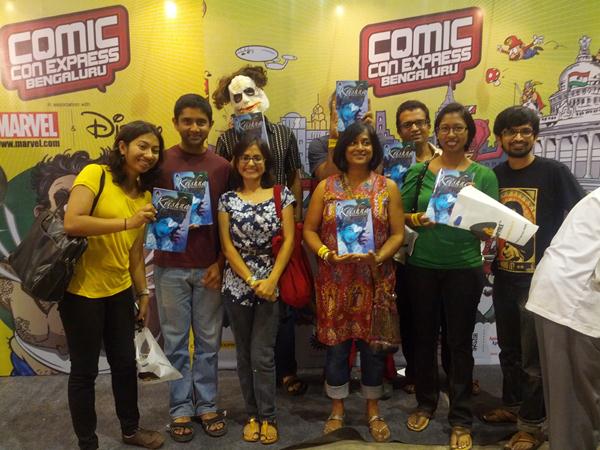
‘Of course I’m not! They’re supposed to be like techie or something,’ I had cried all those years ago. I bow down to your infinite wisdom, T 🙂 And here’s a photo of us in a Comic Con in Bangalore, on my first book launch ever: Krishna Defender of Dharma (he’s the one in black, extreme right).

733

Ahh, memories. Like scattered stars they are. And yes, I am a geek. (Eek).

Yes, Androids dream of electric sheep

There are some books that haunt you as soon as you see them. That’s what happened to me with Do Androids Dream Of Electric Sheep? The title itself, a question, started to haunt me, giving me psychedelic images of possibilities, before I even picked the book up.
It’s written by amazingly creative Philip K Dick, an Amreekan author. It’s a classic now (it was written in an era long, long ago: 1968) and has been reprinted and republished and torrented billions of times.The book leaves you with many other questions. Questions on what’s real, what’s a droid, and how do you live in a world where both these boundaries are increasingly getting blurred. It’s a rather short novel, a mere 200 pages but it leaves a mark on you. I hogged through the book, hungrily lapping it up, saddened when it ended. My life emptied as if I’d just had a breakup. Like someone addicted, I found the Hollywood version, then read about fan posts on Reddit, or where ever. In other words, it took me months to get out of the hauntedness of the book. It’s title however, still sends me in a freeze, wondering about creative possibilities.

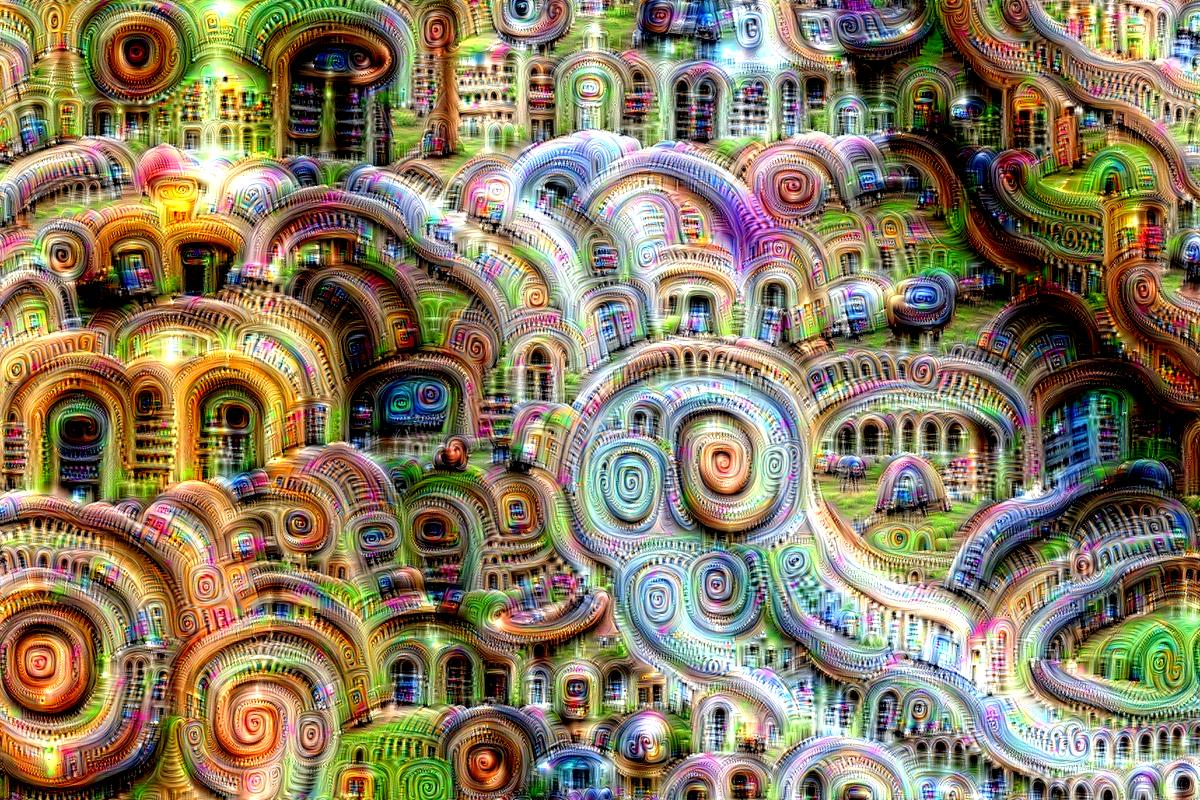
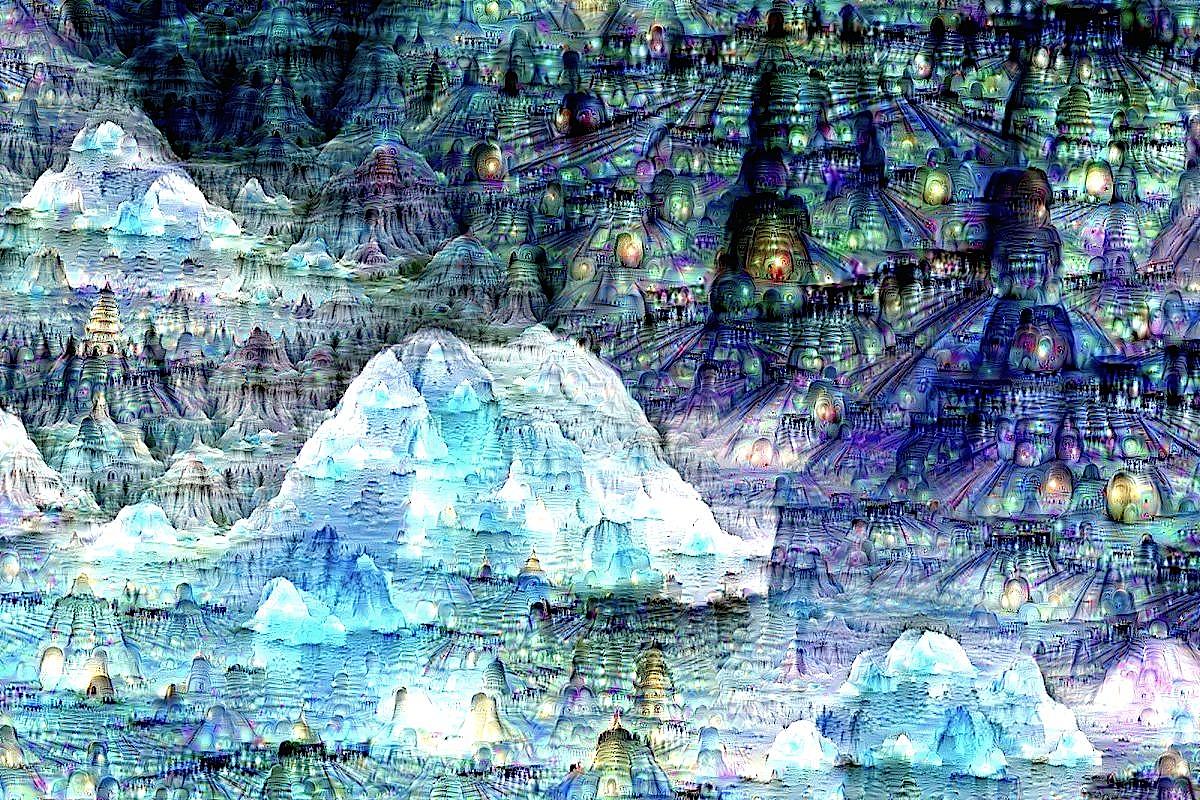
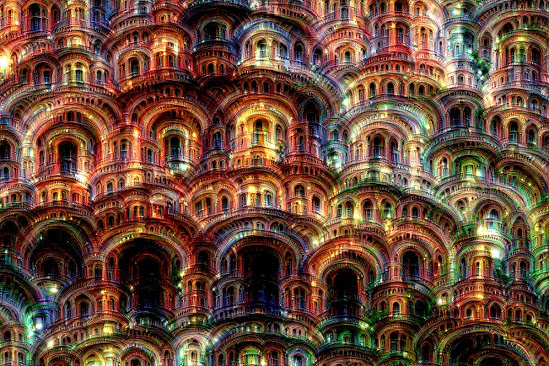
I still think about the bots around me, about their feelings, and about their dreams. I wonder what kind of images flash in their head when I’m not around, or when I’m abusing them by clicking, ticking, swiping, wiping, throwing them. What do cellphones and laptops, televisions and fitness bracelets dream of?  And all this just because of the title. So when I came across this art project by Google Research, I was astounded. They’d visualised what I’d been imagining all this while. Their image recognition software, which can detect, analyze and auto-caption images, simulates the human brain. In a process they’re calling “inceptionism,” Google engineers went on to see what this fake brain dreams of. It’s happening, screamed my brain. (Read what Google Researchers are doing).

Iterative_Places205-GoogLeNet_12 Iterative_Places205-GoogLeNet_20 Iterative_Places205-GoogLeNet_6

And then I came across another art project, inspired by the Google one on Twitch.tv, a site I’m getting increasingly addicted to.  Made by a couple of PhD students from Ghent University in Belgium, this project livestreams what a AI hallucinates. You can tell it what to dream about by messaging on the forum (pineapple, dragons, throne, spider web, anything) and it shows in the stream in a bit.  I spent a whole day with a window of this awesomeness open on my screen, spellbound, in love, gasping for breath, for possibilities. So I had to share some craziness with you all. Go on, sink your time. Be goggled.

Watch  live video from 317070 on www.twitch.tv

Someday, I will write a science fiction about these dreams. Someday.

NDTV Gadgets on the tech stuff I need to write

As part of my work, I’ve been writing on consumer technology for four years now with Mint but didn’t really think on what kind of technology I used to write these articles, books and keep in touch with various things I do. Not until Gopal, the editor of NDTV Gadgets, wanted to feature me in NDTV Personally Tech. Here’s the interview.


In our weekly column Personally Tech we talk to people from all walks of life to learn about the apps and gadgets that they love and can’t live without. Technology has changed the way we all live and work, in myriad ways.

This week, we caught up with author and freelance journalist Shweta Taneja who talked to us about the gadgets and apps that she swears by. As an author, Taneja has a special interest in weaving myth and occult into the fiction she writes. She tells the stories of ghosts and monsters and demons through novels, stories and comic books. Her latest book Cult of Chaos is a urban fantasy story about a tantrik based in Delhi.

But at the same time, Taneja is a techie who loves experimenting with apps and gadgets to see how things can go wrong with them, and tells us that she can’t imagine her life without her smartphone. Read on to know more about her favourite apps and gadgets.

Describe your technology setup – what computer/ phone/ tablet/ camera/ gaming console/ other gadgets do you use and why

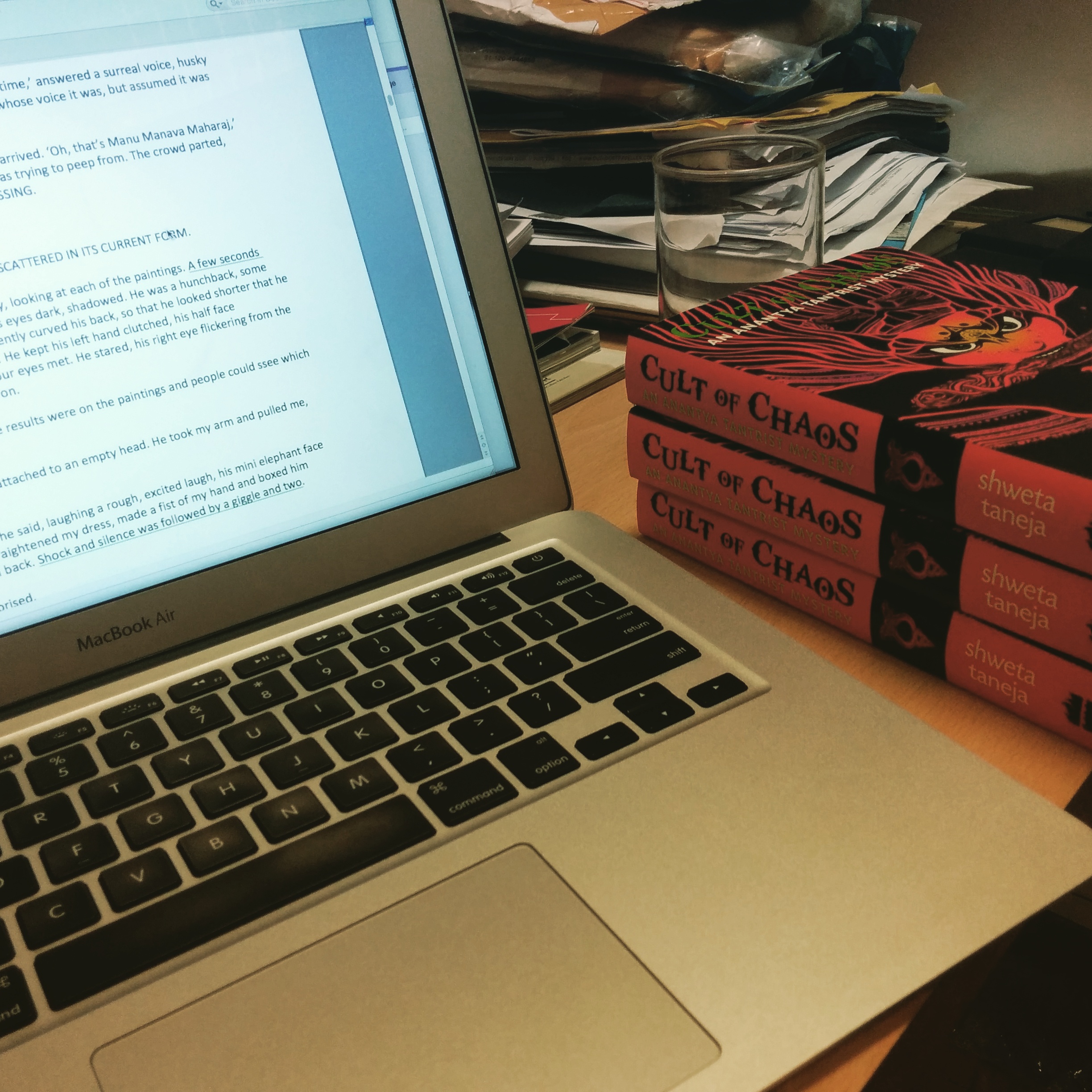
Shweta Taneja: Most of my day is spent on my MacBook Air on which I can be found hunched, furiously typing or fussing over. It is lightweight, portable and has a great keyboard, something that really helps considering I spend more time typing away than eating or even sleeping. I also have a Lenovo desktop with a 27-inch monitor, because when I’m editing, I need a bigger screen to work.

For reading, I have the first generation Kindle, and I sometimes read my own books on it while I’m working on them, to get a fresh perspective. Other than that, I have a Google Nexus 10, which I’m not too happy about in terms of performance but I like it because it’s handy to view comics in as well as see videos. My LG Google Nexus 5 is my life and is never too far away from my hand. It’s useful for work and for entertainment, or taking photos.

What are three apps (mobile/ tablet or PC/ Mac) you couldn’t live without and why?

Shweta Taneja: The most important app is an Internet browser. I use Chrome on my Nexus 5 but am not very happy with it, so I might switch to another one if I find a good alternative. When I’m writing, I am also reading online, either an out of print book from Archives.org, or an article or a folktale or myth on Wikipedia. So the browser is very important for me as a writer. I also love Instagram and PicsArt. PicsArt is the best way to create collages and for sharing, I find it easiest to post on Instagram.

The most used app is probably Gmail. I  use my Gmail account for all my official communication, with editors, publishers, agents or for my freelance work, with startups or NGOs or doctors.

Which is the one gadget (other than your phone) you never travel without and why?

Shweta Taneja: I definitely can’t travel without my phone. I use it as a camera, for Google Maps, to share photos on the go through Instagram. I use its flashlight when camping, and I love Sky Map to look up at the stars at night.

On holidays, I am never without my Vortex Crossfire binoculars, which are essential to see details on architecture, birds or monkeys.

What is your dream gadget/ technology setup?

Shweta Taneja: I would like to pick up an SLR now since I’m getting a bit better at photography. I am also curious about the iPad and portable keypad combination since I’m a writer and like to write from anywhere really.

How has technology changed the way in which you work?

Shweta Taneja: It has changed everything for me. I grew up using a 286 computer and remember programs being perennially stuck. By college, our machines at NIFT used to run Windows Vista and hang regularly! Laptops today are faster and much more powerful, and this affects all your work.

When I’m writing, I research online, find people/ bloggers/ social media hogs talking about an issue and it’s become much easier to find people, the right people to talk to. As a folklore researcher, Internet has also made it possible for me to have access to books, scholarly articles and information across the world. I have thousands of libraries at my disposal.

=================

What are the gadgets and paraphernalia you use for writing? Post them in the comment section below!

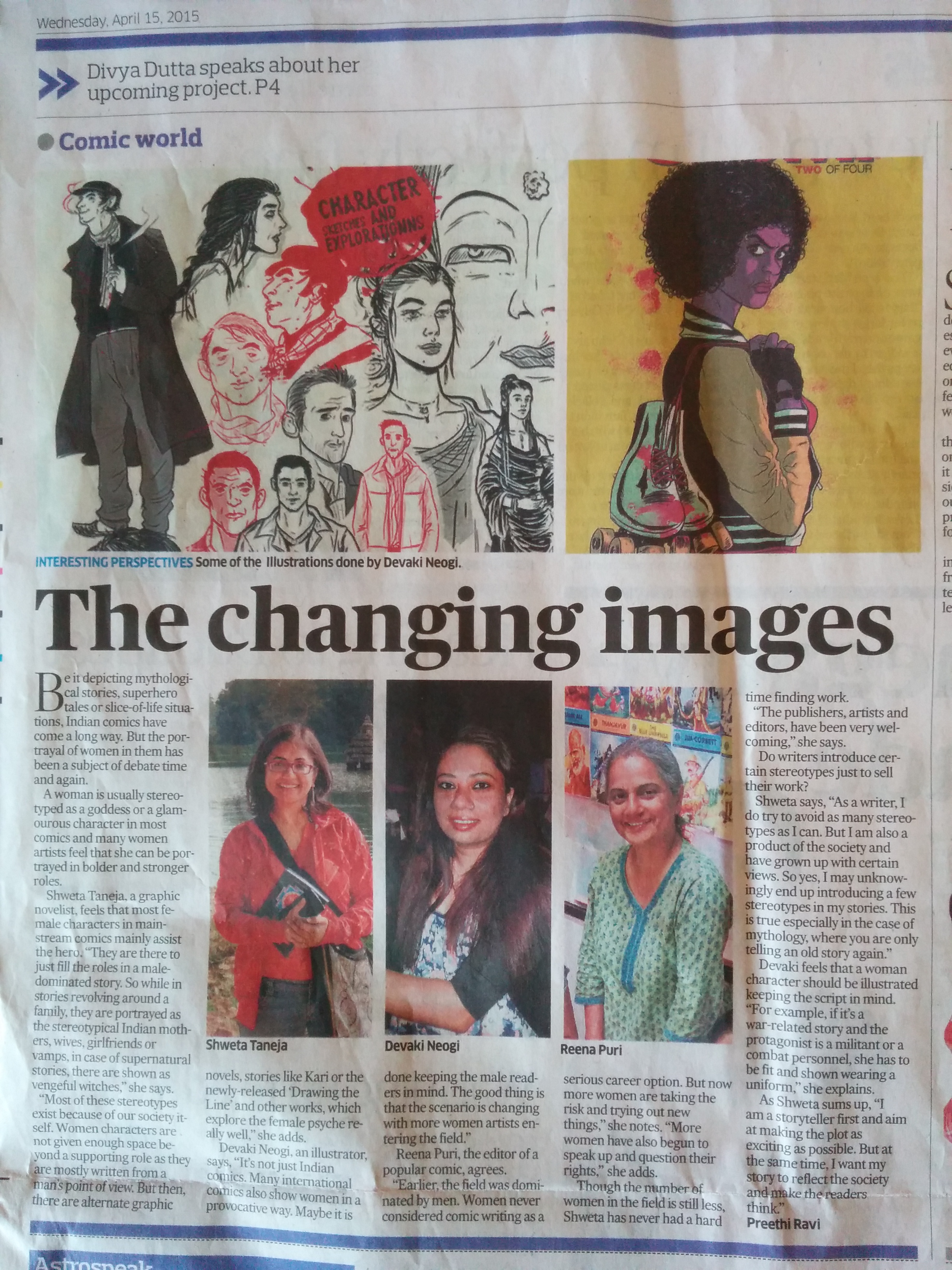
Why aren’t there more women in comics?

Before you tag this post as that fashionable F-word, hear me out. I’ve been working in comics since a few years now. Much more than their western counterparts, the Indian comic industry is welcoming to both genders, across board. They’re open to story ideas which go beyond fanboy or superhero fiction. I’ve worked on two graphic novels (Krishna, The Skull Rosary), pitched a lot of work and worked on smaller comics and am yet to encounter misogyny or bad behavior of any kind in publishers or artists or other writers. Yes, I do tend to meet a lot of guys who’re into comics than girls, but they’re not necessarily looking out for superhero fiction. They’re looking out for good stories. Still, the industry, the artists, publishers, editors, and writers are mostly men.

Then I’ve been part of the children book industry (my first novel Ghost Hunters of Kurseong is for tweens), which again is teeming with talented writers and artists. This industry, catering to kids of both genders, is mostly female. The editors, writers, artists, are all women.

There are very few overlapping creators (either writers or artists) who do both kinds of work – children books and comics. Now I’m the curious sort and frankly this just doesn’t make sense to me. I mean writers are writers and should be able to write for any medium, right? And illustrators and artists should be able to draw for any medium. So why don’t they? This question irritated me enough to push Comic Con to do a panel on it in Bangalore this year. With me there was Reena Puri,  a well-respected editor with ACK Media and Devaki Neogi, who is one of those rare illustrators who draws for international comics. We took the idea apart, thought on it, brainstormed over email about the panel as well as on stage, but couldn’t find any concrete answers on why there is such a gender bias in comics.

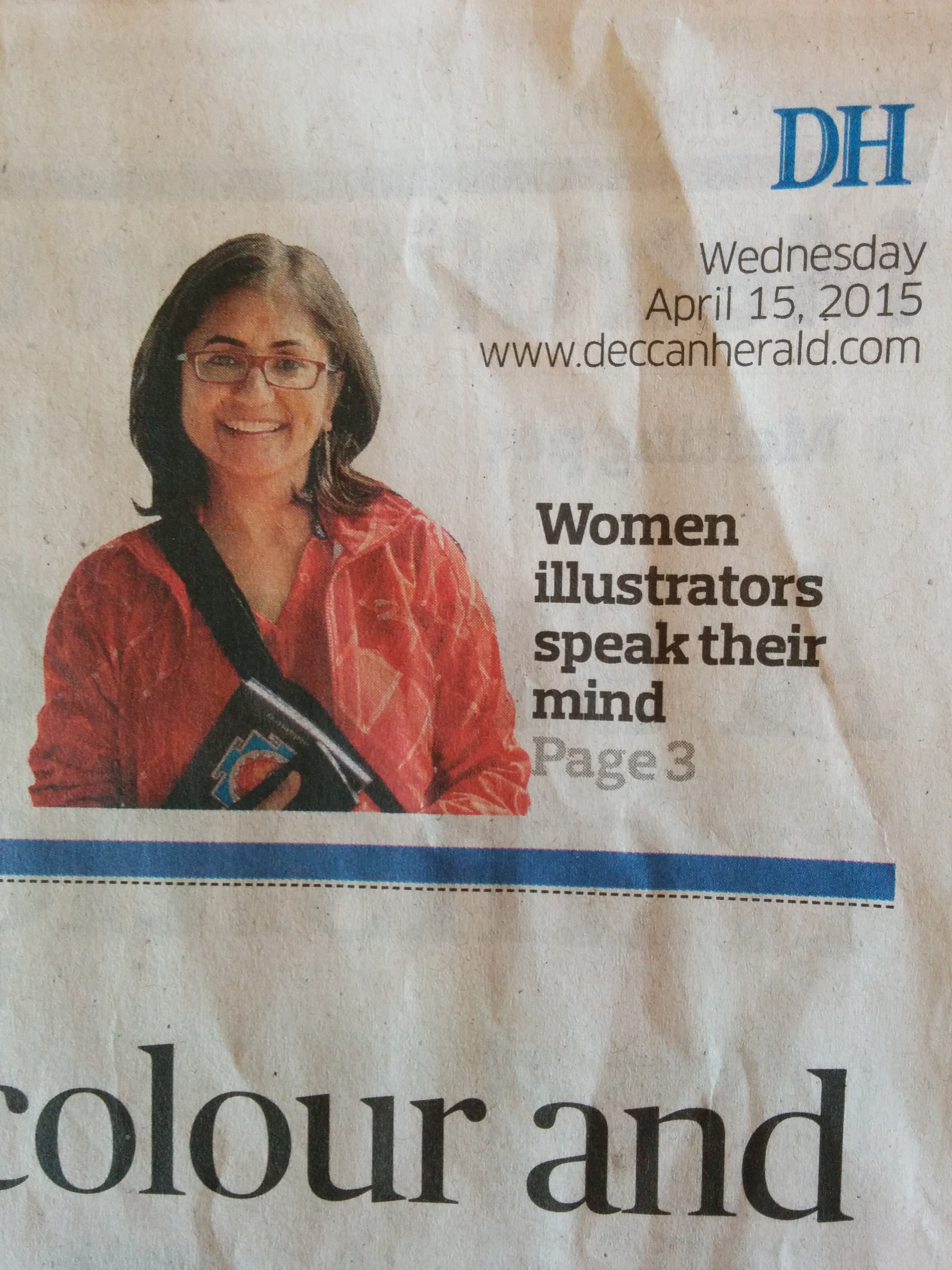
The panel even made a journalist write an article on portrayal of women in comics in Deccan Herald:

Deccan Herald on women in comics

==========

Except, it didn’t answer my question. Some of the sort-of answers that I’ve collated from various people (and not necessarily my opinions) are listed below. Poll on them and tell me what you think:

Why aren’t there more women in comics?
  1. It’s easier for women to get into children’s books
  2. Comics are misogynist, made for men by men and women don’t feel welcome.
  3. Women aren’t comic readers so they don’t create comics
  4. Superheroes and sexy women is just not a woman’s thing.
  5. There’s tight deadlines and not enough money in making comics.
  6. Why are you bothered about this question? Go write your books, will you?

Agree with one of them or have a  different answer? Add to the comment section below. (Till I figure out how to put a poll here that is.)